Day 8 – Morondava

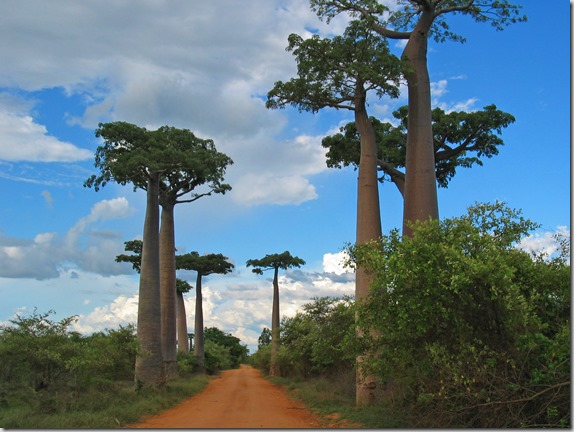
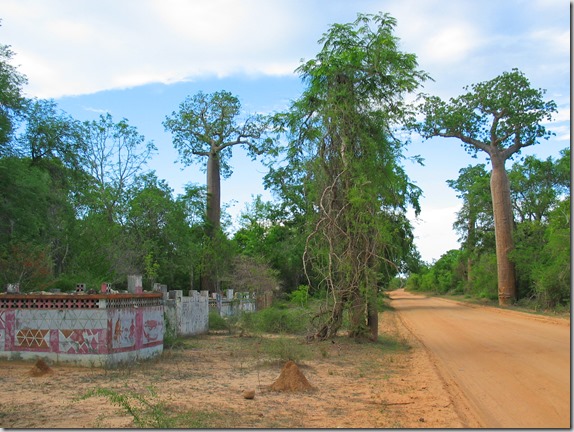
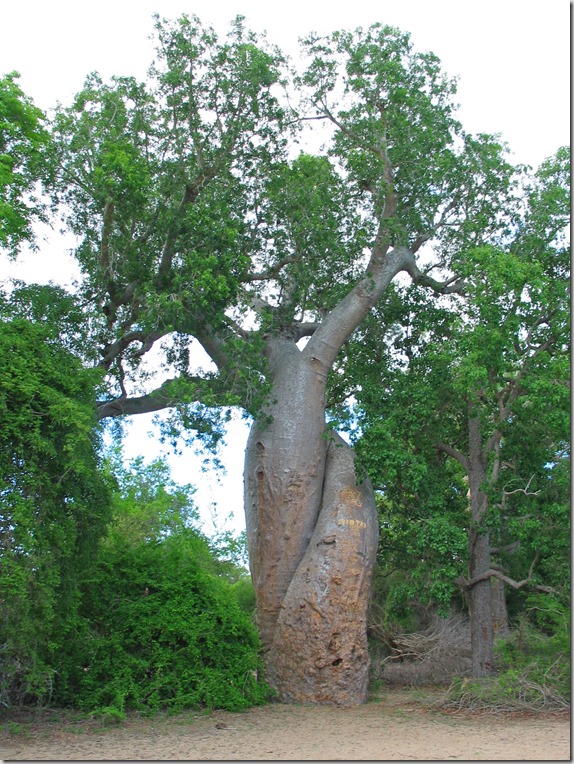
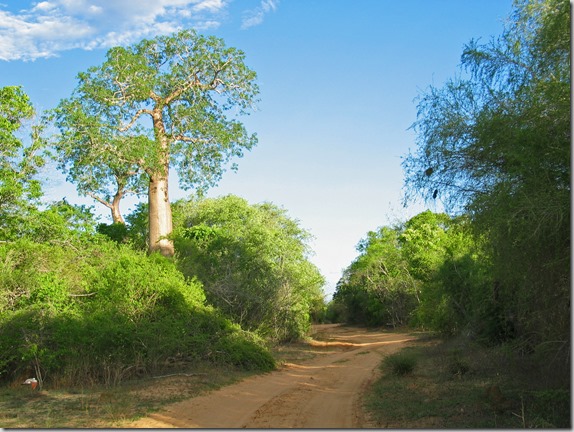
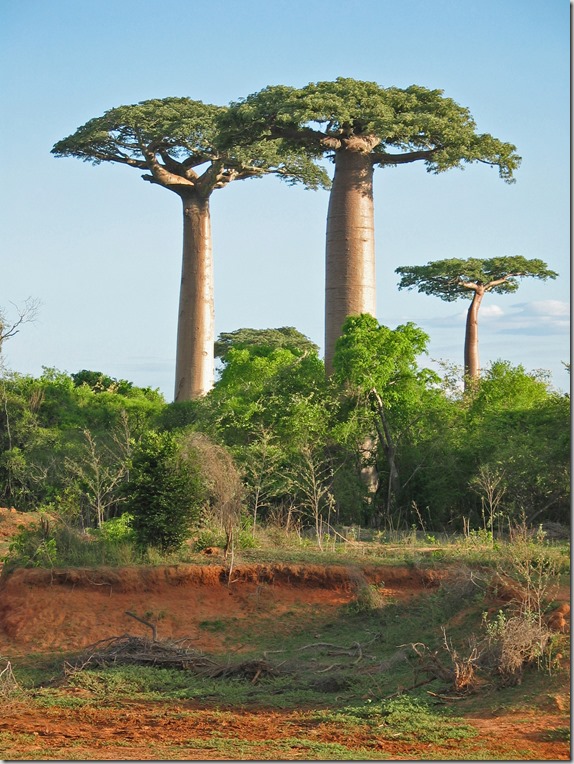
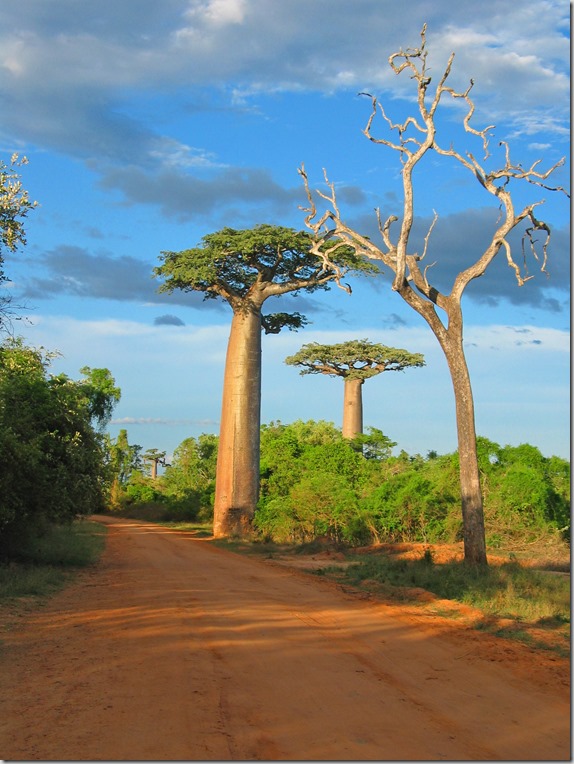
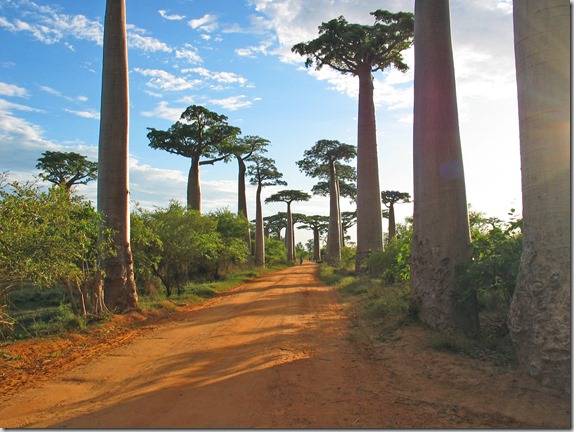
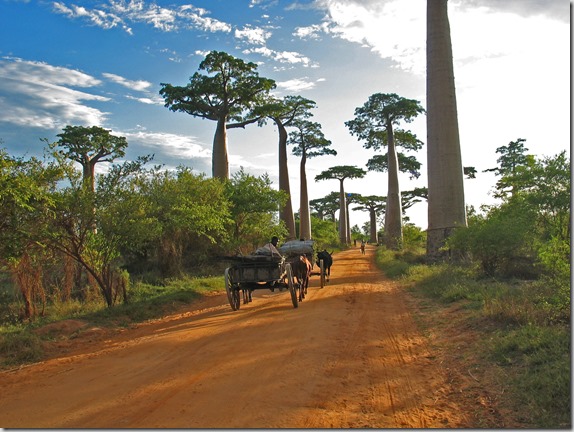
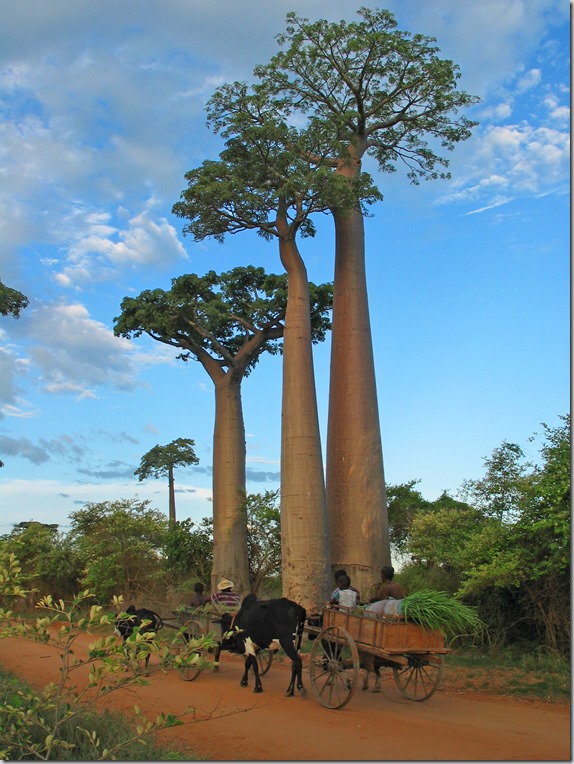
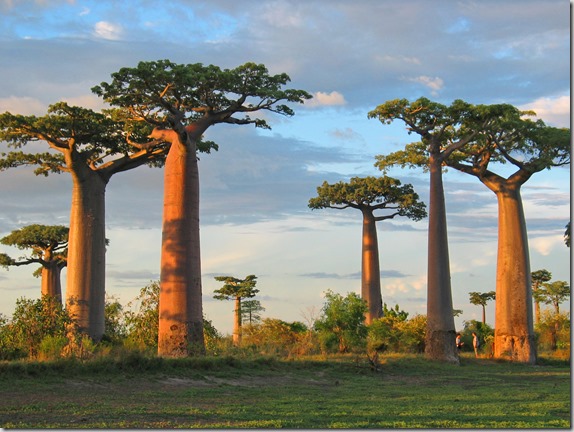
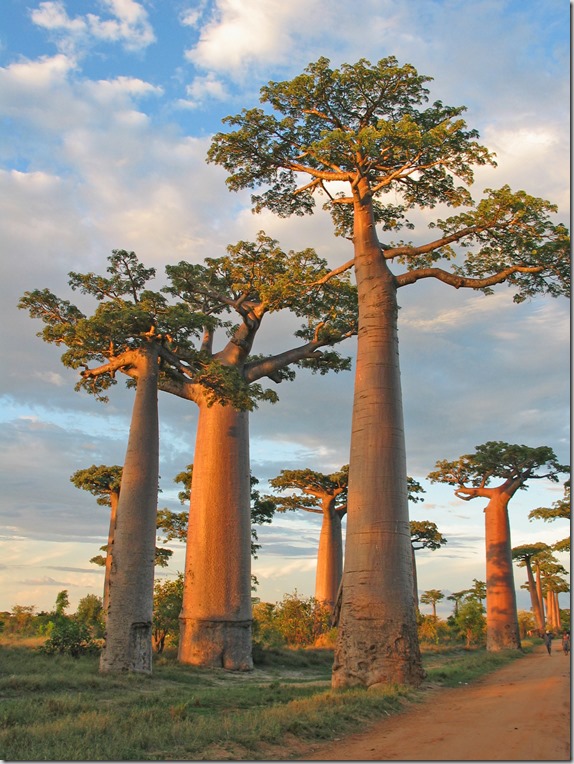
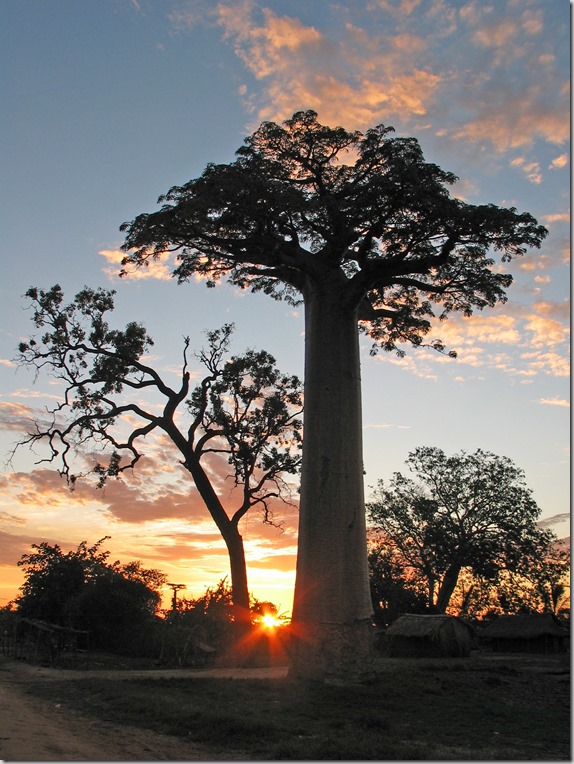
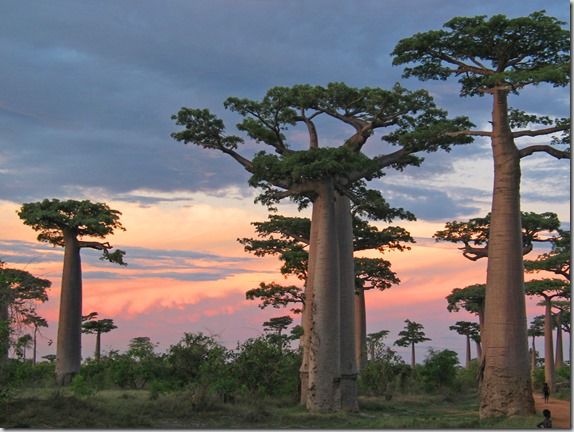
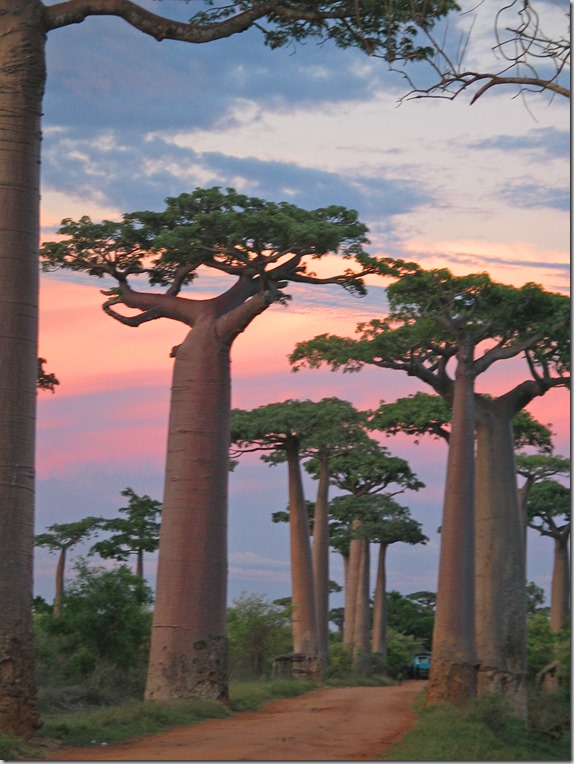
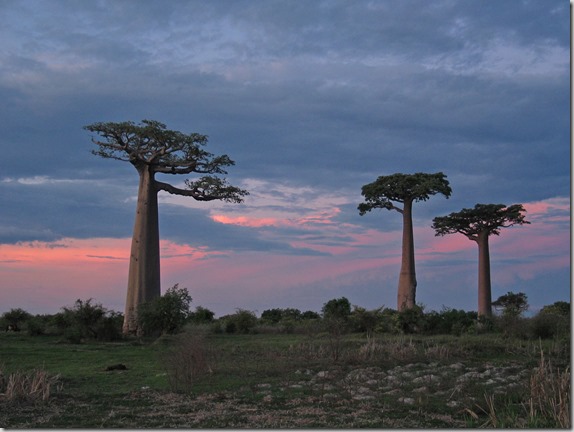
Today we set out to visit Morondava on the west coast of Madagascar.  People had cautioned me against going here, saying it was dirty, to be very careful of what and where you eat, and that it wouldn’t be much fun.  However, I really wanted to see the baobab trees, and this was the place to do it.  There are 7 types of baobab trees in Madagascar, and the Morondava area has 3 of them, and quite a number of them.  I am extremely glad I went.  I ended up taking 375 photos during the 1 day we spent here, burning through 2 camera batteries (good thing I brought my charger).  The town was dirty, but the food was fine at the hotel, and the rooms were clean and the air conditioning worked well in the room.

Getting to Morondava

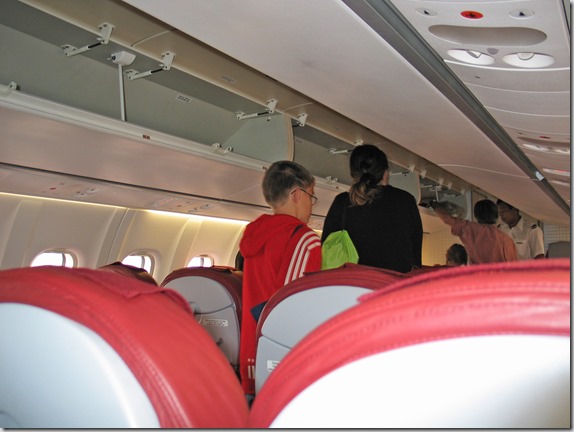
We caught a mid-day flight to Morondava, which is about 1 hour flying time on a very nice 72 seat propeller plane.  Fairly new and with leather seats.  They even served lunch, which I didn’t expect since the flight was only 1 hour.
IMG_5508_edited-1

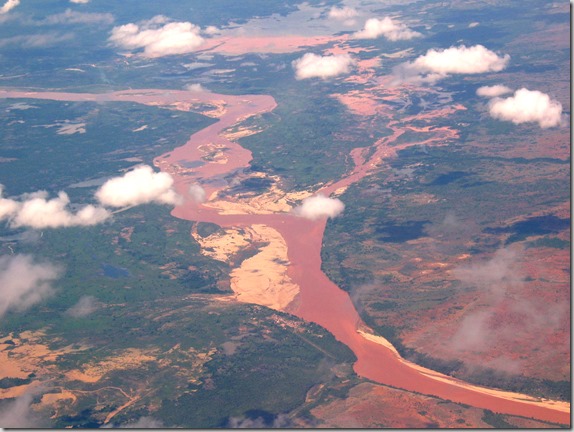
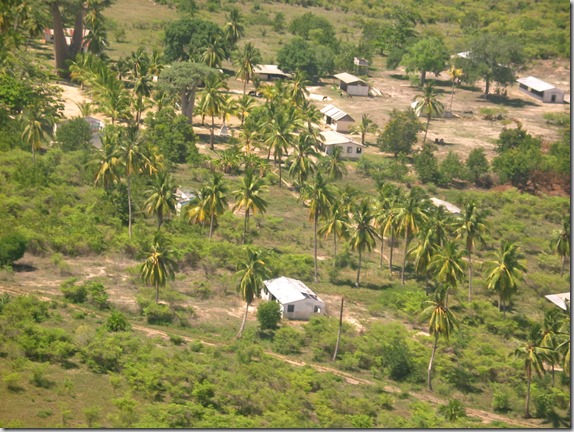
As we flew from Antananarivo to Morondava, the landscaped changed dramatically.  The capital city of Tana is set in the mountains in the interior of the country, filled with hills, valleys and winding rivers.  Morondava is a coastal city that is flat and with very different vegetation, including the baobab trees that we flew here to see.

Shown here is a river in the mountains taken from the plane.  Notice the red colour of the water.
IMG_5533_edited-1

Here is the landscape as seen from the plane, just outside of Morondava.
IMG_5557_edited-1

When we landed in Morondava, it was 35ºC before counting the high humidity, and the sun was very strong.  I’m just not used to this kind of heat, and nothing here is air conditioned, except for our hotel room.  I put on a hat and lots of sunscreen when we got to the hotel.

Below are some photos taken at the airport in Morondava.  This is a very small airport.  Once they loaded the baggage on the single conveyor belt next to the tarmac, the plane very quickly taxied out to the runway and left.  I think they only have the one flight in and out of here per day.

Here is a view of our plane taken frm the baggage claim area in the Morondava airport.
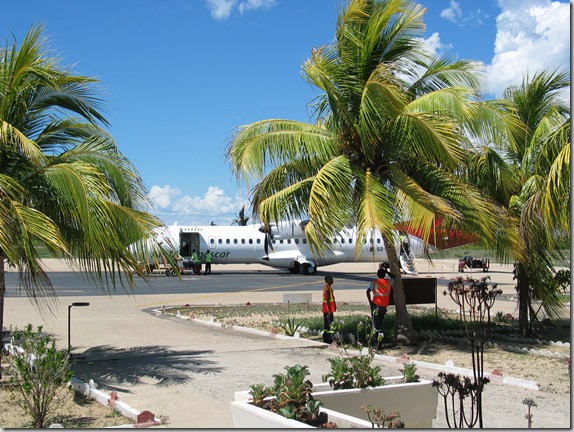
IMG_5566

Here is the baggage claim area.  Just a simple conveyer belt from the outside into the terminal.
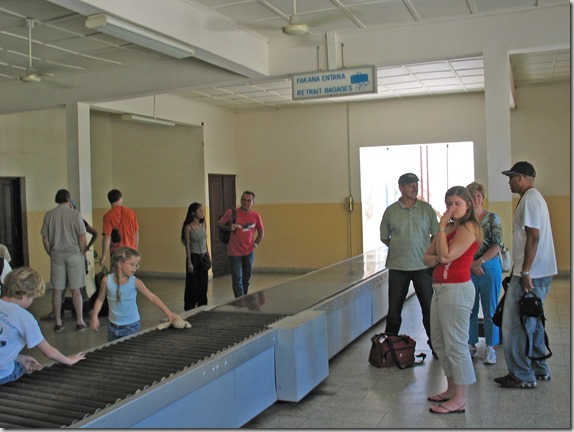
IMG_5568_edited-1

We were met by our prearraged transfer to the hotel.  The guy from the hotel who met us at the airport, was also our guide who would take us out to see the baobab trees later that afternoon and evening.  Here are a few photos on route to our hotel.

Our guide and his 4WD truck…
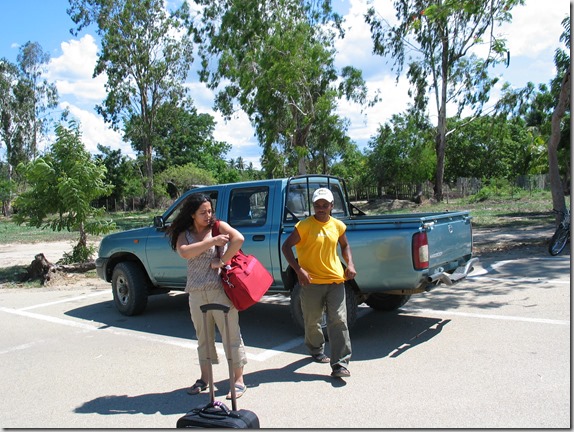
IMG_5571

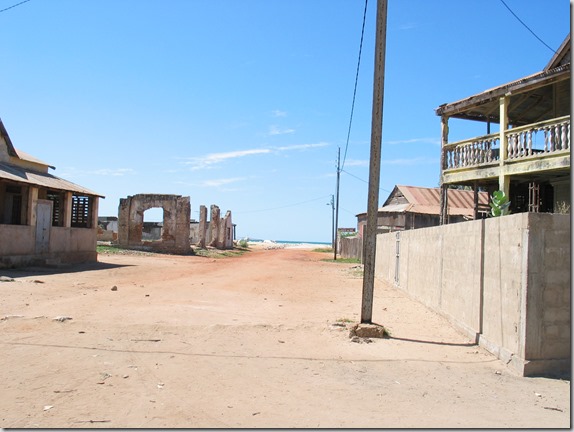
Off the main street of Morondava…

IMG_5585

View of the ocean (actually the Mozambique Channel; the Indian Ocean is the other side of Madagascar)…
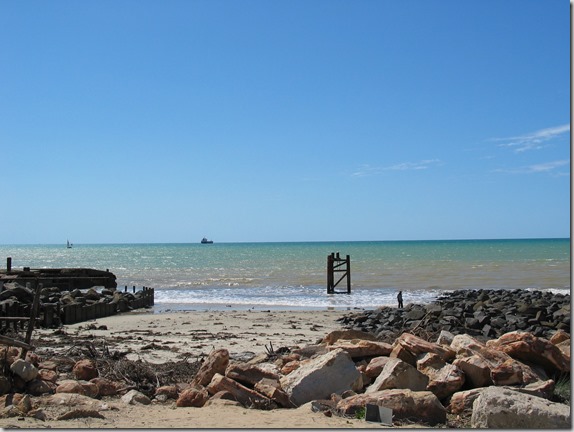
IMG_5587

Entrance to our hotel, the Baobab Café…
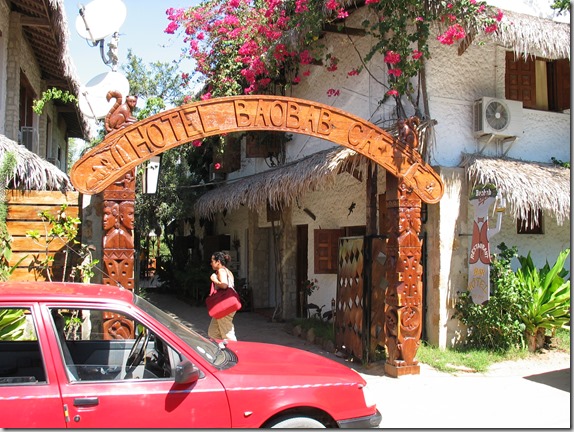
IMG_5591

Below are some photos of the hotel.  Nice place in the middle of a very poor and dirty town.  Shown here is the main entrance to the hotel.
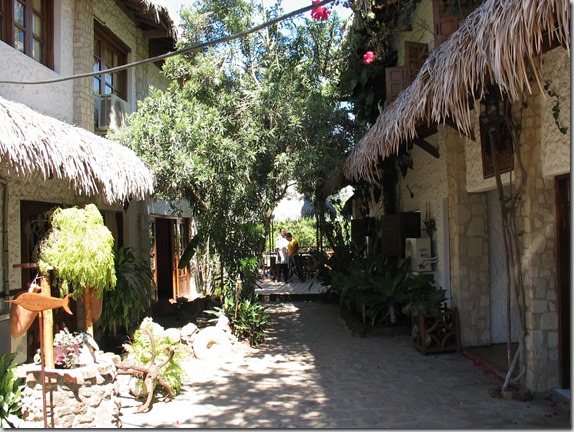
IMG_5592

View of the pool from our room balcony…  I hope the coconuts don’t fall in the pool.
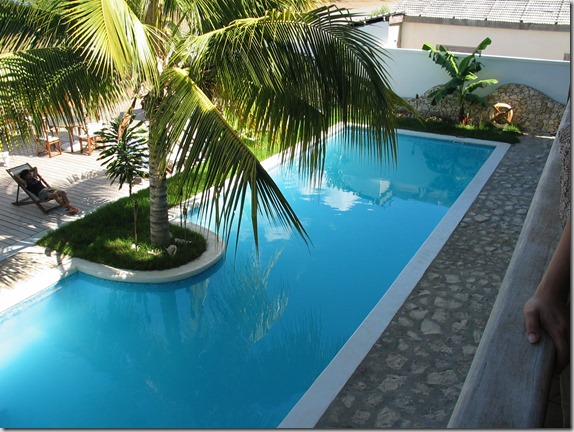
IMG_5594

Another view from our balcony.  The hotel backs on to the river.  The ocean is across the street.
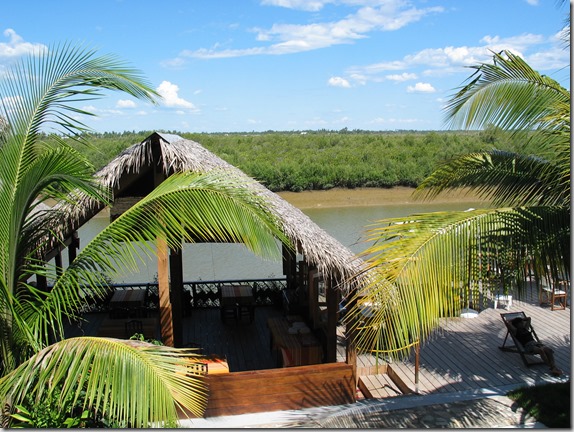
IMG_5595

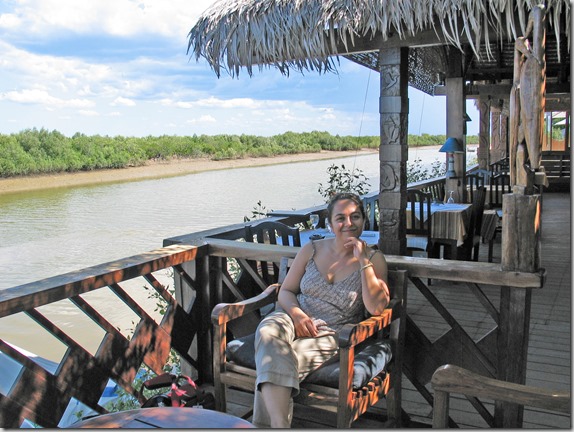
Having a drink in the dining area…

IMG_5602_edited-1

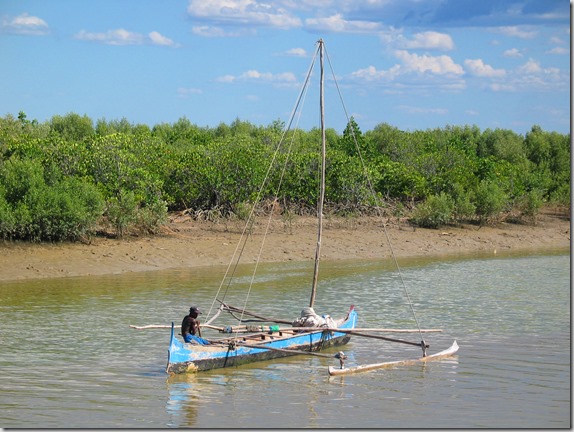
Watching a local fisherman paddle by the resort on the river…
IMG_5604_edited-1

Visiting the Baobab Trees

Our guide then drove us out to visit the baobab trees.  Below are some scenes of the town while driving out to the country.  The famous Alée des Baobabs is about 15 km northwest of Morondava.

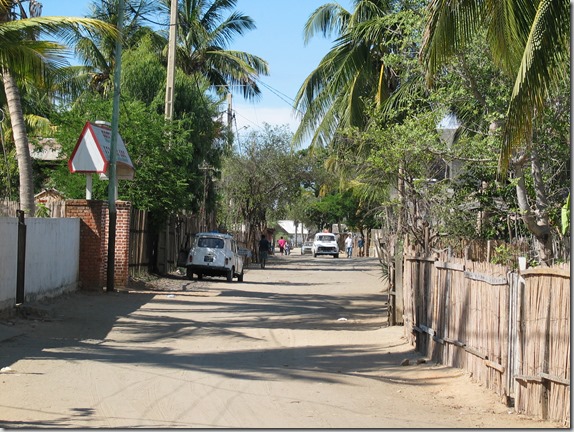
Here is a typical street in the town of Morondava…
IMG_5615

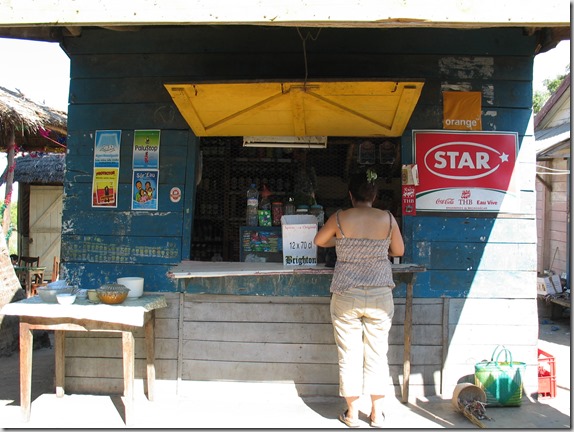
Buying a bottle water at a local store…
IMG_5616

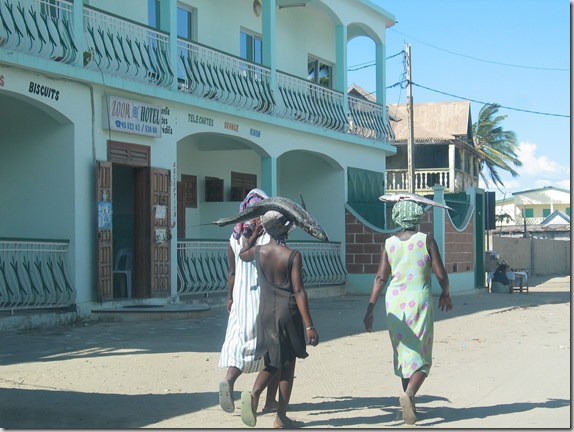
Carrying a really big fish through the town…
IMG_5618

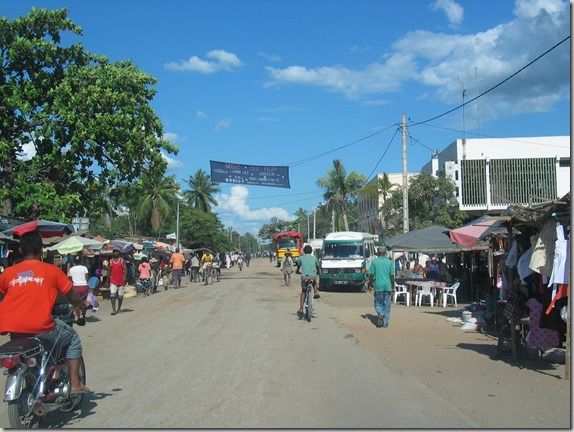
A main street in Morondava.  I think the only one that’s paved, though not in good shape…
IMG_5625

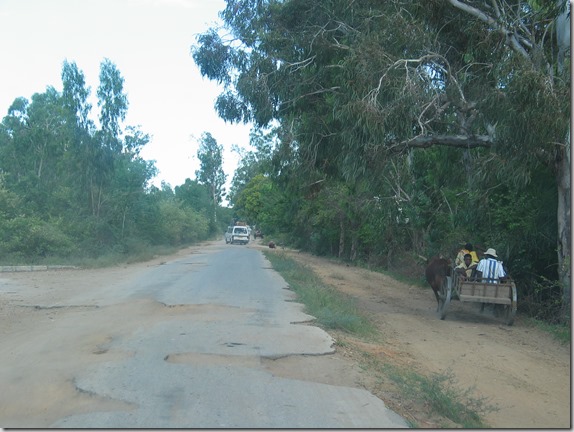
Continuing out of town.  Note the poor pavement that is typical, where pavement exists.
IMG_5632

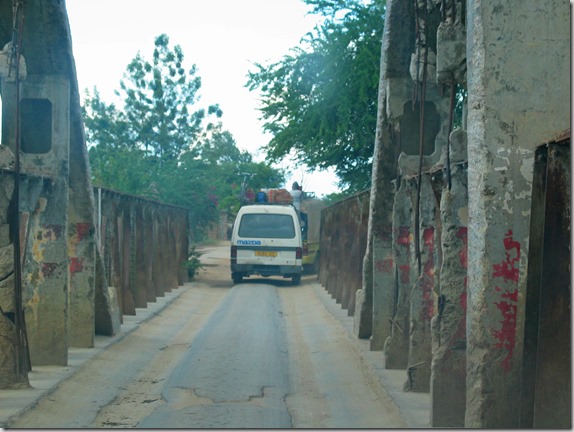
A small bridge outside of town…

IMG_5638_edited-1

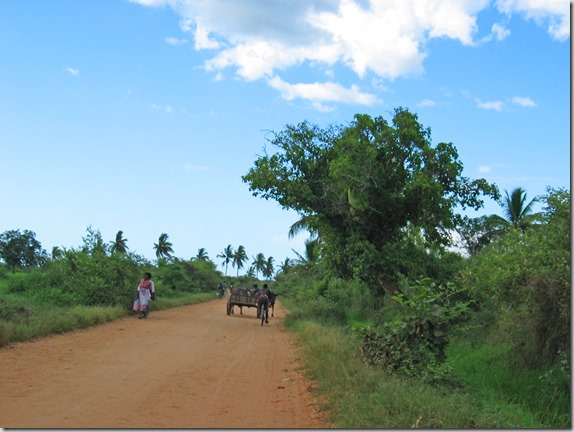
Typical road outside of town.  Notice the red colour of the sand that you see everywhere.
IMG_5645_edited-1

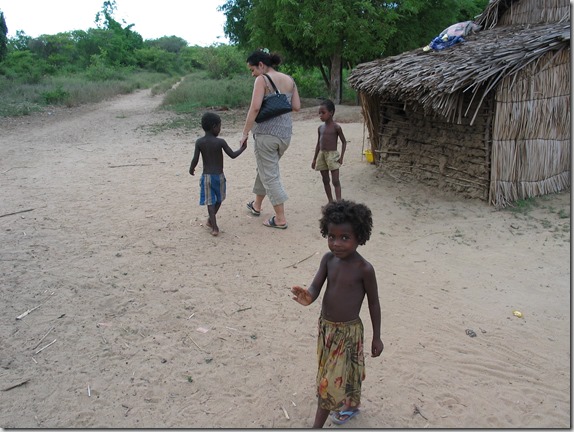
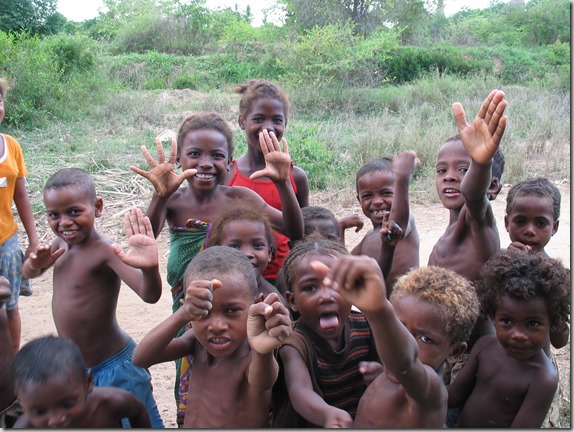
The local villagers who live out by the baobab trees are very friendly.  Although these people have nothing and live in dirty huts made of sticks, they seem very happy with their lives.  The children frequently ask to have their photo taken.  Nadine can communicate with these villagers as the dialect of Malagasy that she speaks is close enough to what these people speak.  Here is Nadine with some village children.
IMG_5649

Some village children posing for a photo…
IMG_5651

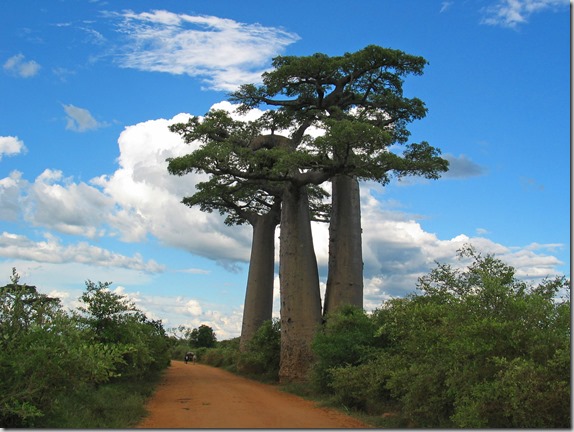
Here are some photos of the baobab trees.  Note to dad…  I think you would have loved this portion of the trip.  You probably would have complained about the heat, but otherwise I think you’d like it.
IMG_5666_edited-1

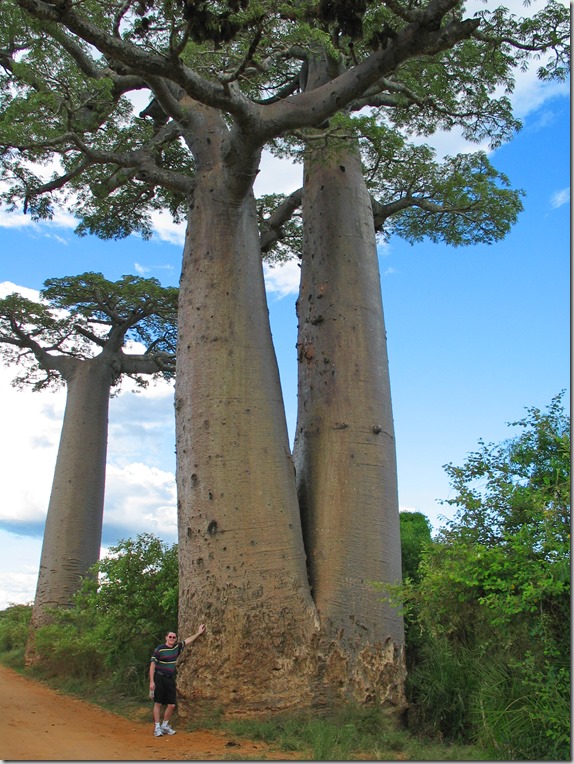
This is me standing next to the Baobab Twins…
IMG_5676_edited-1

IMG_5679_edited-1

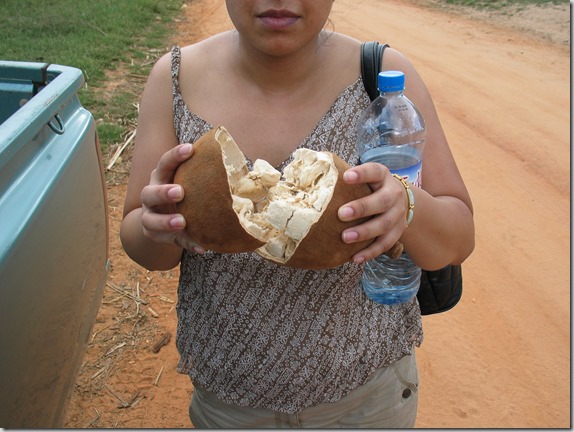
Eating the fruit of the Baobab tree…  It’s very sour!
IMG_5680

Continuing up the road…

IMG_5686_edited-1

IMG_5715_edited-1

Tombs next to the Baobabs…

IMG_5732_edited-1

Baobab Lovers…

IMG_5739_edited-1

Road to the Baobab Lovers…

IMG_5768_edited-1

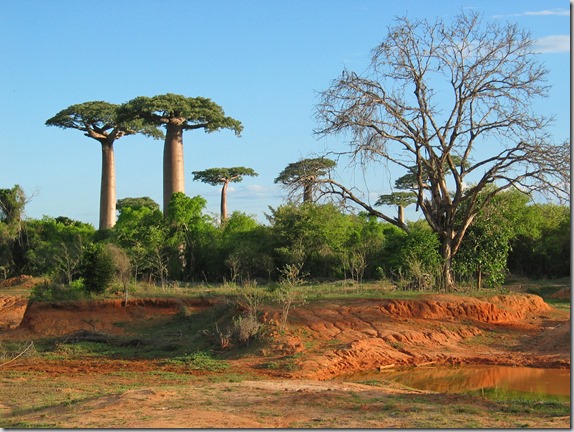
Getting close to sunset, the red becomes more vibrant.
IMG_5771_edited-1

IMG_5772_edited-1

IMG_5774_edited-1

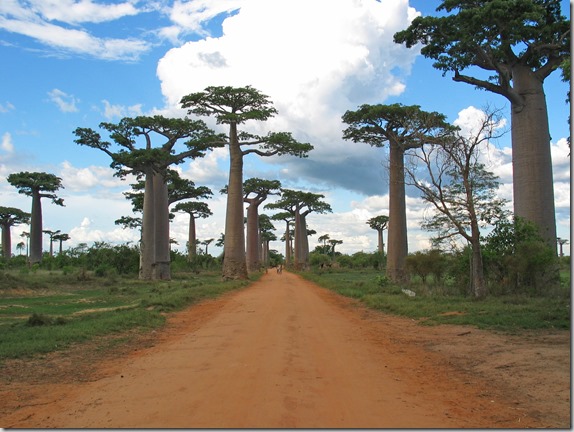
Alée des Baobabs…

IMG_5775_edited-1

IMG_5777_edited-1

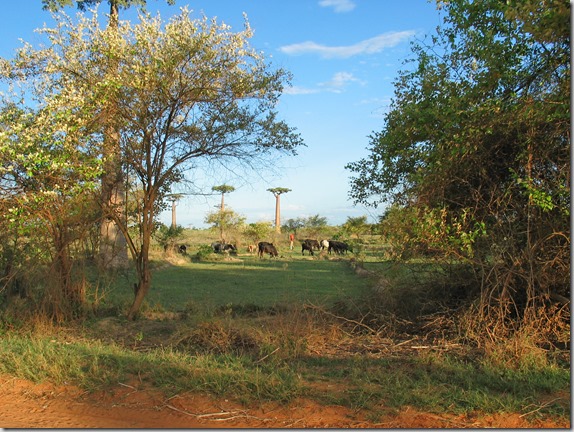
Zebu moving through a neighbouring field…
IMG_5782_edited-1

More Alée des Baobabs…

IMG_5797_edited-1

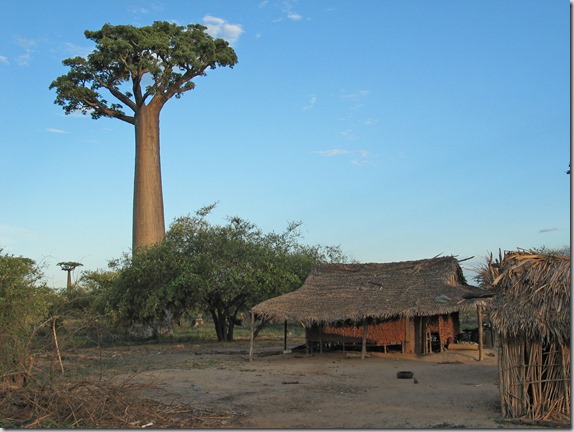
Village hut along the Alée des Baobabs…
IMG_5805_edited-1

IMG_5816_edited-1

IMG_5824_edited-1

IMG_5832_edited-1

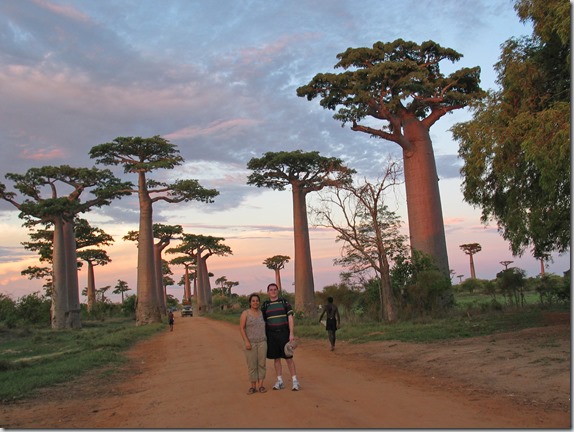
Dave and Nadine in the Alée des Baobabs…
IMG_5835_edited-1

Alée des Baobabs at sunset…

IMG_5836_edited-1

IMG_5844_edited-1

IMG_5845

IMG_5850

Baobabs after sunset…

IMG_5852_edited-1

We then returned to our hotel after sunset.  I’m glad I wasn’t driving, as dodging all of those potholes, people and zebu carts under cover of darkness looked like a challenge.  Anyway, we made it back to the hotel and enjoyed a nice dinner on the patio.  Even at night, this place is very hot and humid.  What I can’t understand is that at the table next to us were two Japanese girls, wearing long pants, long sleeves and a heavy scarf–all ready for a cold winter night!  I didn’t get a picture as we left the camera back in the room on the battery charger during dinner.  The temperature even at night was about 32, felt like 45 with the humidity, and there was absolutely no breeze.  We then returned to the comfort of our air conditioned room for the evening.
Day 7 – Antsirabe to Tana

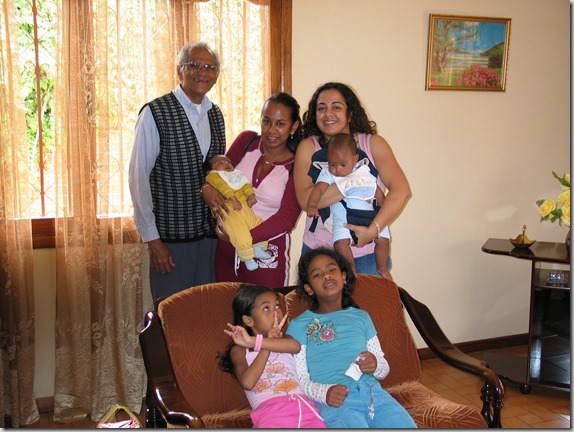
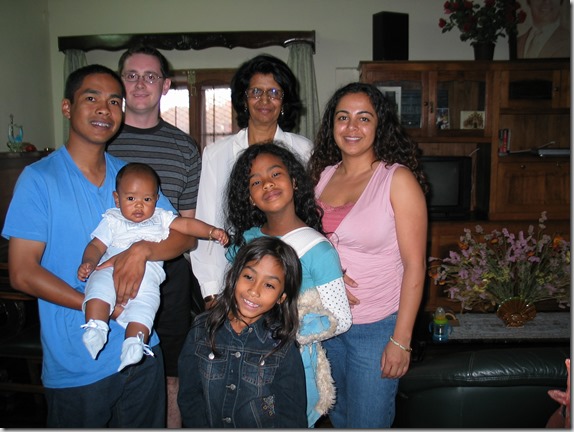
We awoke in the morning and had breakfast at the hotel before heading out for the morning to visit some of Nadine’s relatives in Antsirabe from her father’s side of the family.  Below are a few family photos.
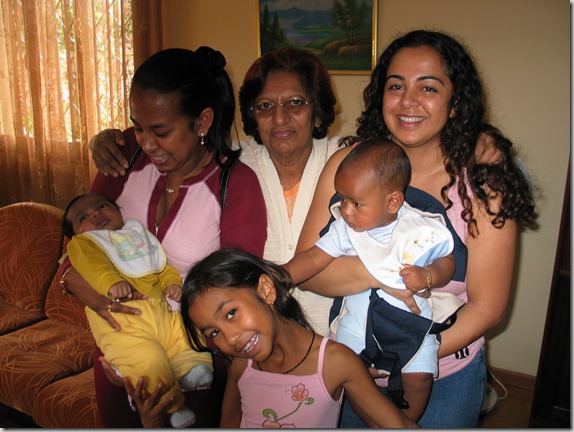
Nadine with her aunt and her new grandson, and family…

IMG_5410

Nadine with her uncle and family…

IMG_5413

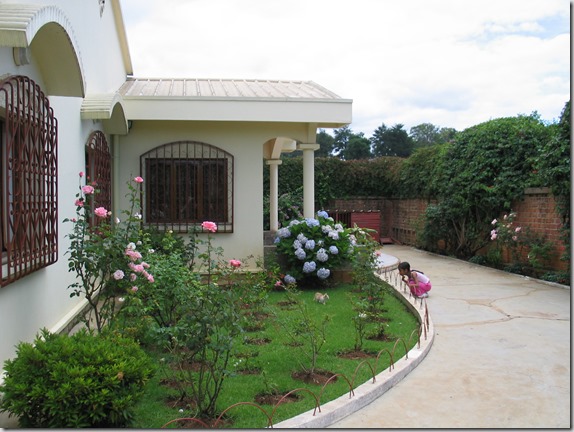
Océane trying to catch the cat in the front yard…

IMG_5419

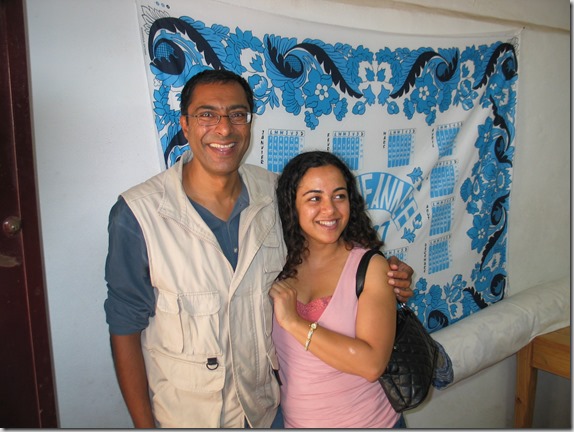
Nadine with her cousin, the father of the new baby in previous pictures…  This picture was taken at the family bulk fabric store in Antsirabe.

IMG_5420

Nadine with another aunt and family…

IMG_5502

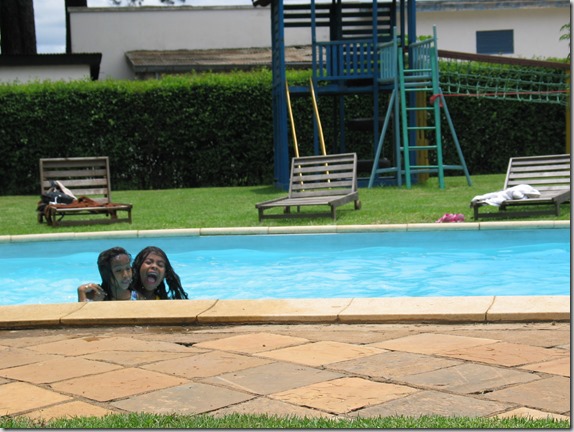
After having lunch at Nadine’s aunt’s place, we returned to the hotel to rest by the pool.  Here are Maya and Maya and Océane in the pool at the hotel…

IMG_5440

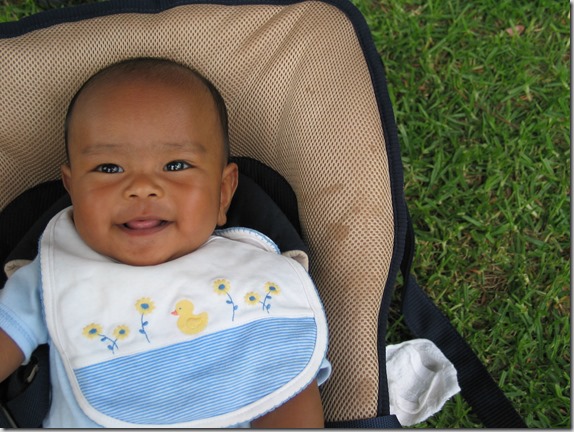
Baby Mattieu by the pool…

IMG_5449

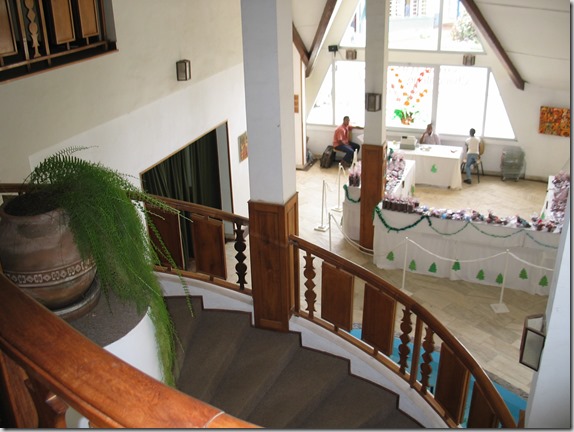
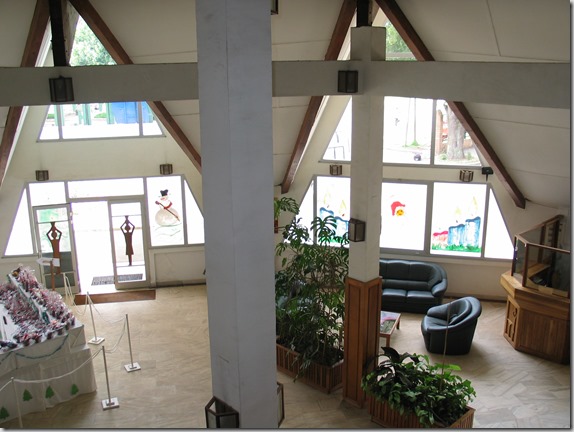
After spending some time by the pool, we checked out of the hotel and returned to Tana.  Here are a couple of photos of the hotel lobby.

IMG_5501

IMG_5500

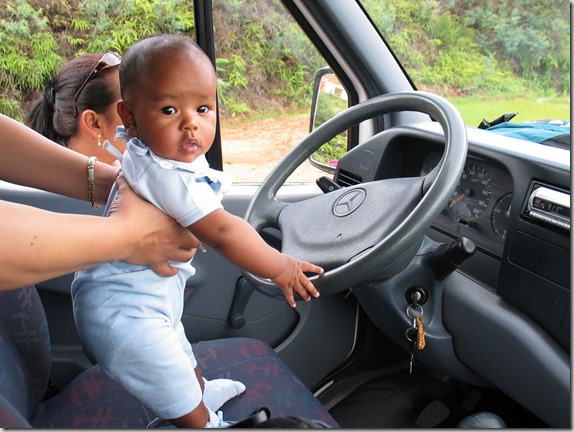
And here is Baby Mattieu driving home to Tana!

IMG_5506

Day 6 – Antsirabe

Today was the day I would finally see where Nadine was born and spent her first 17 years.  Tsiry rented an 18-passenger van and driver for 2 days, which would be our transportation.  Antsirabe is a town about 180 km south of Antananarivo, and the road to get there is in pretty good shape.

As a bit of an aside, the current President of Madagascar has been working hard to improve the infrastructure.  As a self-made businessman, he understands the importance of a good transportation infrastructure if the economy is to improve.  Therefore, it has been a project of recent years to rebuild much of the failing road network.

The Drive to Antsirabe

The road to Antsirabe from Tana is full of twists and turns as it winds its way through the mountains and valleys of the interior of Madagascar.  It is very scenic, and I took many photos along the way.

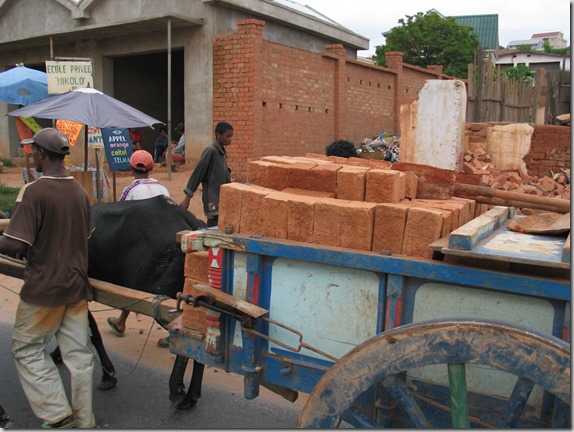
Below is a local moving a load of bricks, which is a very common sight here.  You also see piles of brick like this at the side of roads everywhere.  Actually, many of the locals make this brick at the side of the roads near the rivers and rice fields.  You see them forming the red clay into bricks and then baking them in fires at the side of the roads.  All brick is pretty much made locally–almost on site.

IMG_5234

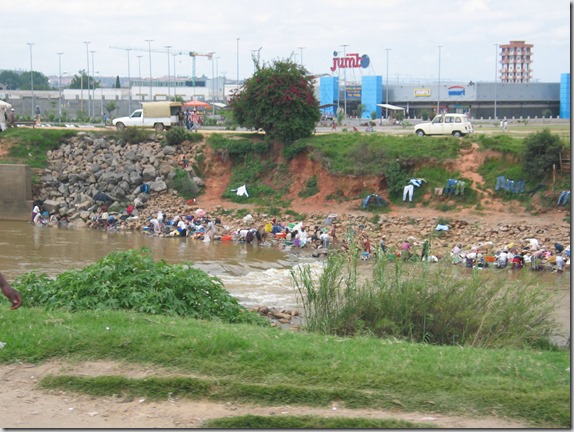
Here we see the locals doing laundry in the river.  I don’t know if the dirty water actually makes the laundry cleaner.

IMG_5232

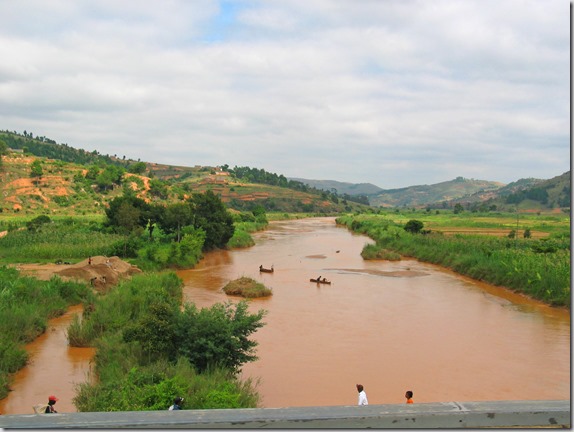
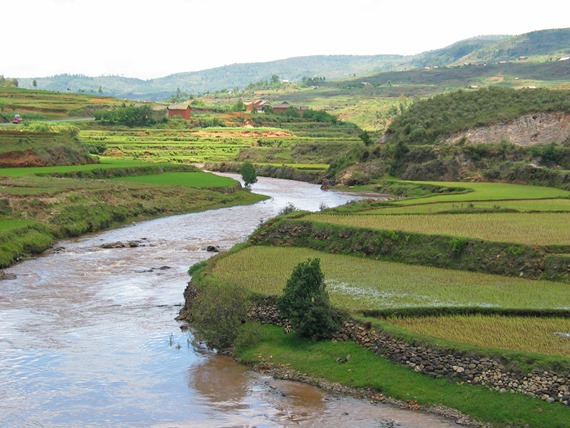
Another of the many red-coloured rivers…

IMG_5248_edited-1

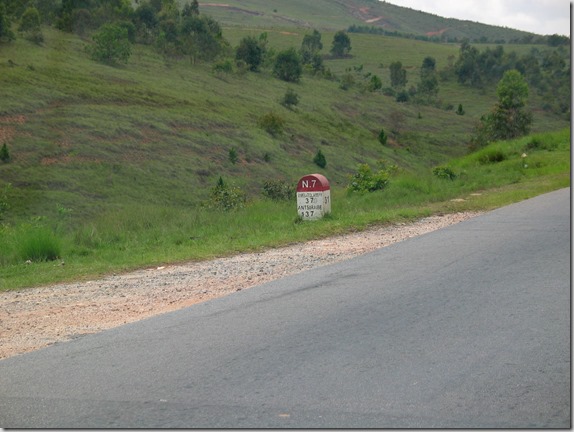
Stone route marker along the highway.  RN7 (Route Nationale #7)…

IMG_5258_edited-1

We stopped at a marketplace of artists along the road (I didn’t get a photo of the place, but it was quite nice).  I purchased a nice canvas painting of a zebu cart being pulled along the Alée des Baobabs.  We bargained and I got it for 150,000 FMG, which works out to about $12.  Of course, it will probably cost me about $200 to have it framed when I get home.  I’m told that prices in stores are largely firm.  However, when purchasing from shops like this, the rule of thumb is to offer 1/3 of the asking price.

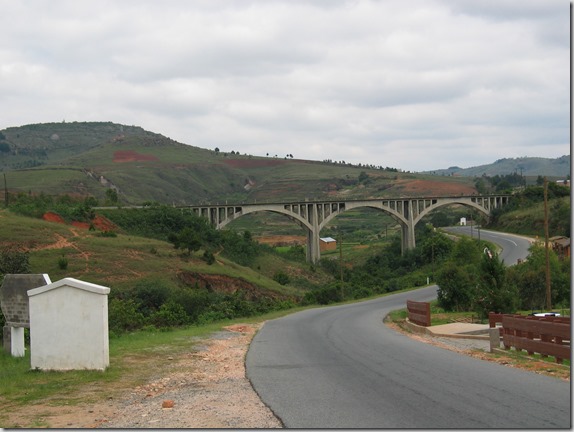
Here’s a picture of Bridge crossing the highway just down from the market where we stopped.

IMG_5257

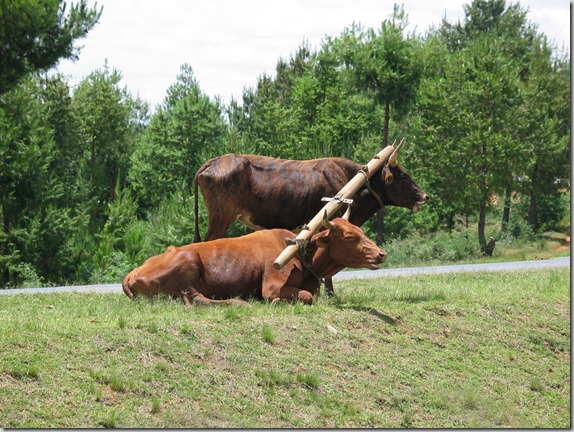
Zebus resting at the side of the road…

IMG_5272

IMG_5271

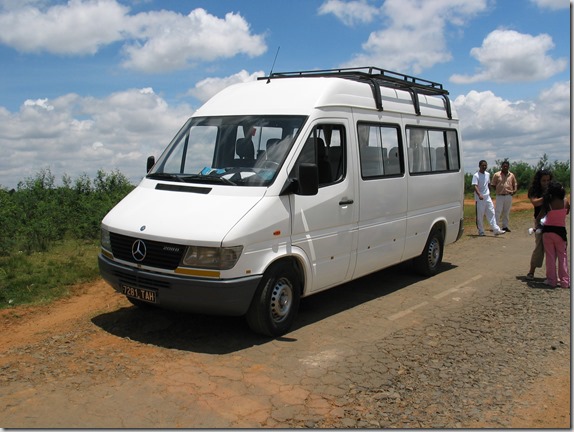
Our mini-bus transportation…

IMG_5273

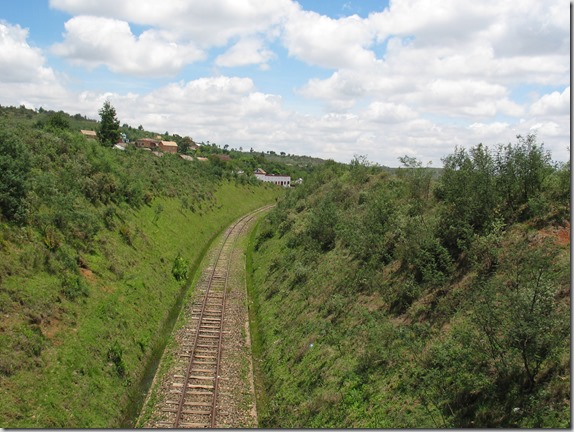
Railroad underpass.  Note it’s only 1-metre gauge in Madagascar…

IMG_5281

Nice valley along the road…

IMG_5294

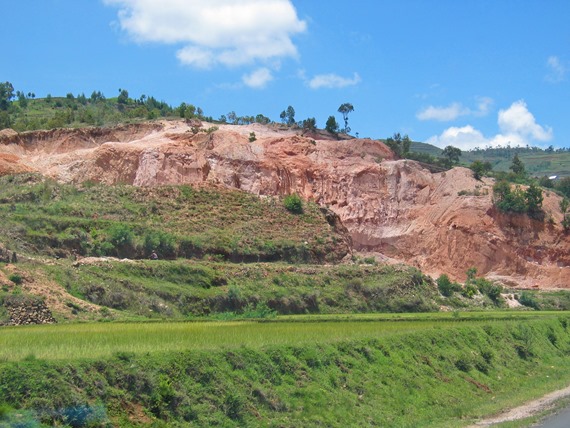
Red cliffs…

IMG_5285_edited-1

Another river picture…

IMG_5287_edited-1

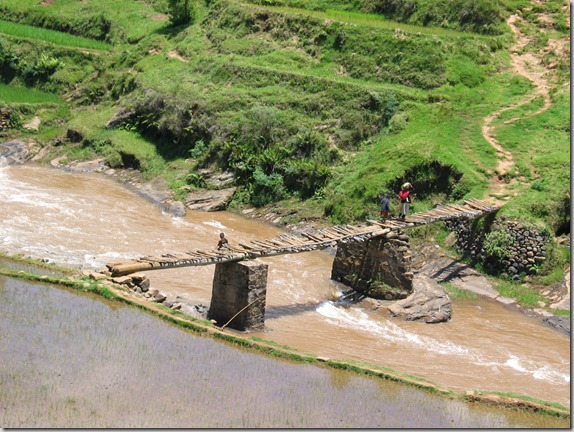
A bridge I don’t think I would want to cross…

IMG_5296

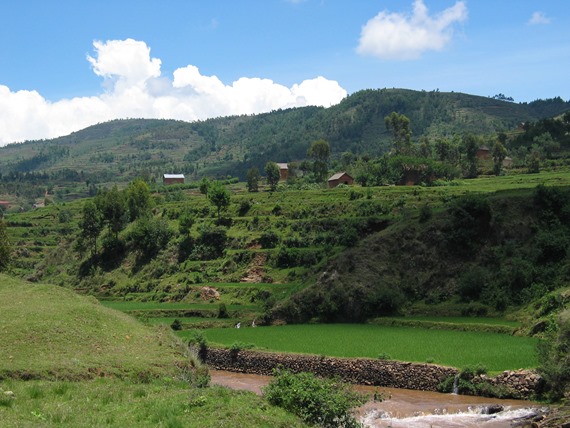
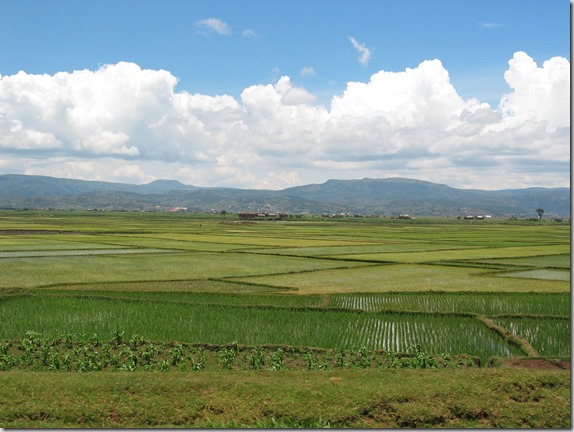
Large area of rice fields and other crops…

IMG_5306

As we got closer to Antsirabe, the crops moved from being lots of rice fields to more and more vegetables.  Apparently, Antsirabe is known as the best place in Madagascar for vegetables.

Arrival in Antsirabe

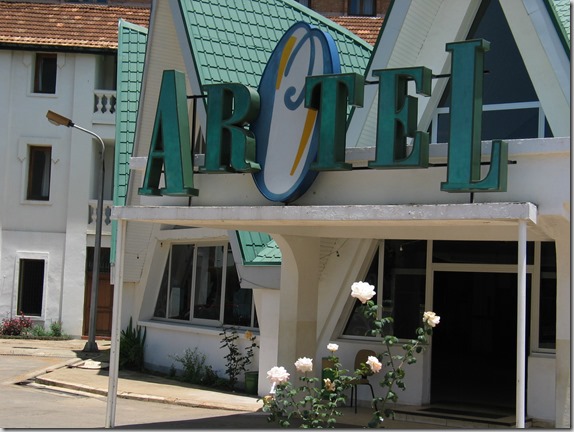
We arrived in Antsirabe around lunchtime, checked into the hotel and had some lunch before exploring the town.  Below is a picture of the front of our hotel in Antsirabe.  It’s nothing fancy, but it was comfortable.

IMG_5314

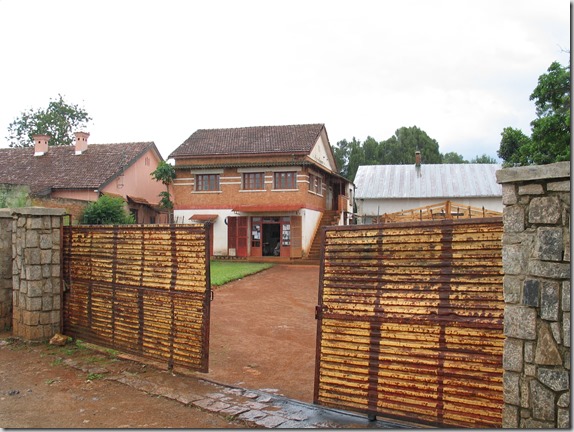
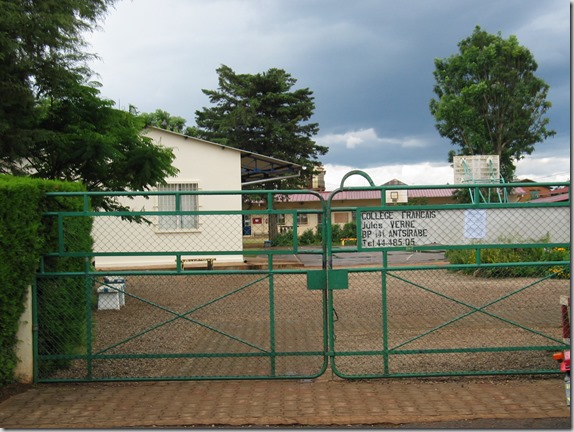
Below is the house that Nadine lived in during her high school years.

IMG_5317

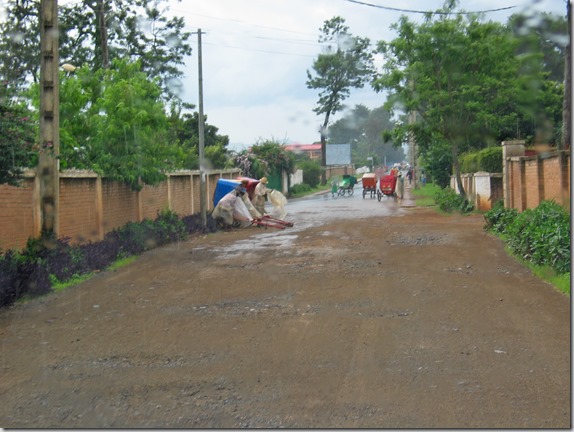
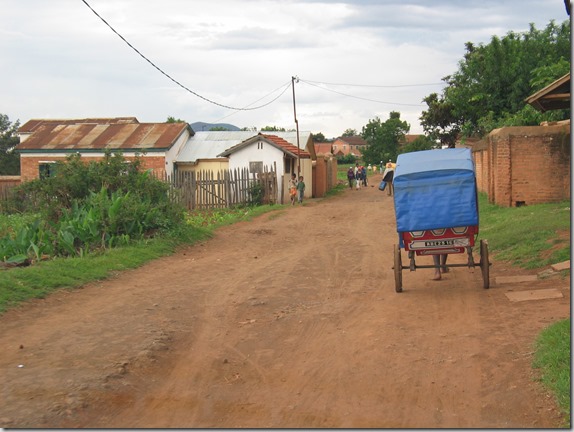
Route d’Ambositra–A street on the way to school…

IMG_5320_edited-1

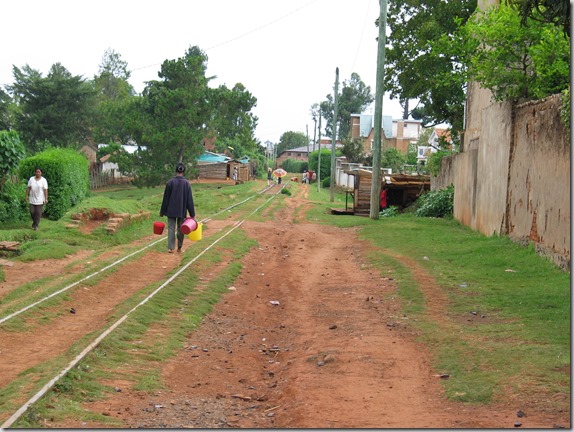
Shortcut to school along the railway tracks…

IMG_5327

Nadine’s primary school…

IMG_5331

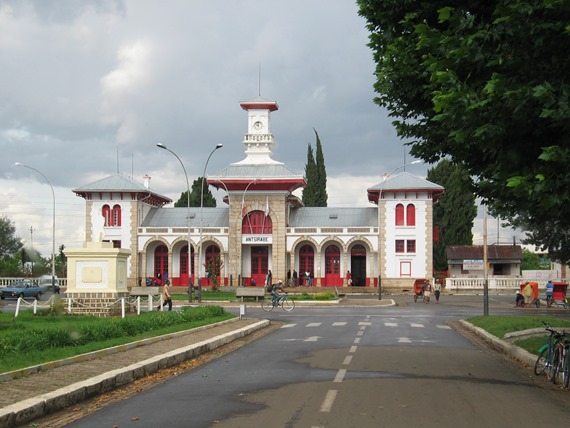
Train station in Antsirabe…

IMG_5335

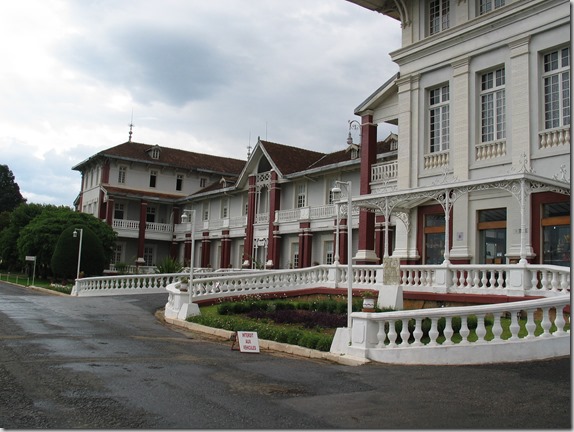
Hotel des Thermes—Nice hotel we didn’t stay at…

IMG_5339

Visy Gasy—Source of thermal water…

IMG_5359

A road on the way to Nadine’s mother’s farmland…

IMG_5368

The road in front of Nadine’s mother’s farmland…

IMG_5375

Nadine’s mother’s farmland…

IMG_5371

One the way to the family plot…

IMG_5377

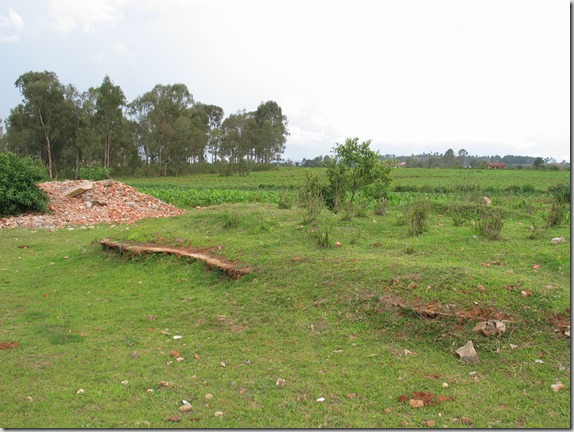
This is the site of the house Nadine was born in.  In the foreground, we see the remains of the original family house.  In the background is the family tomb where Nadine’s mother, her grandparents, and other generations of her mother’s family entombed.  Ancestral traditions are very important among Malagasy families.  Ancestors are often celebrated through exhumations.  The Malagasy and some other Australian tribes are the only people who practice exhumation.

IMG_5383

Nadine’s mother’s family tomb…

IMG_5384

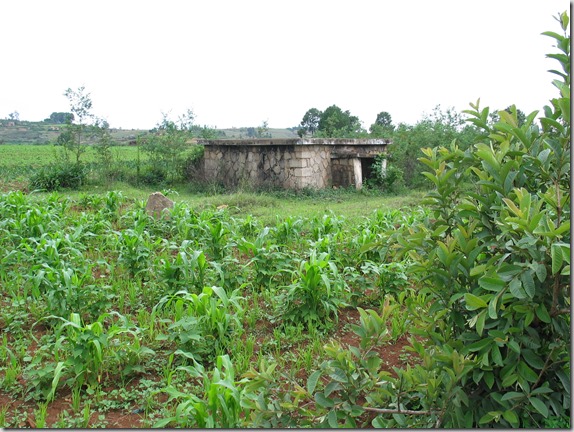
Debris of the other family house, which we did not expect to see destroyed…

IMG_5386

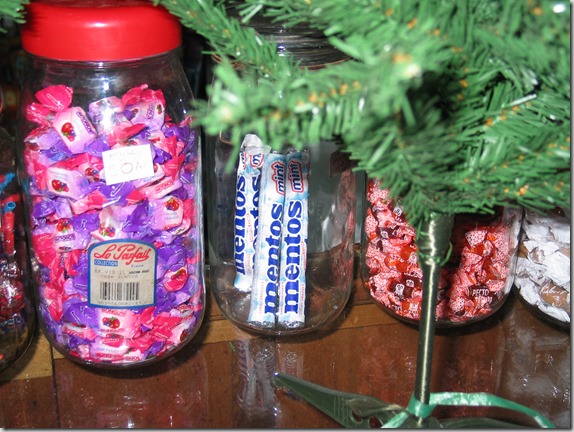
After visiting some family sites in Antsirabe, we went to a local store for a few things.  Even out here, you can still buy Mentos!

IMG_5397

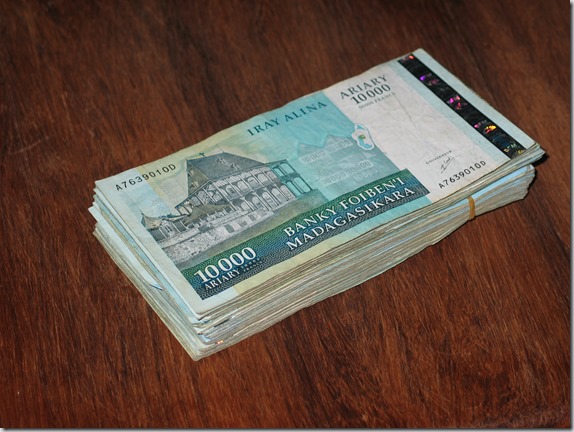
I changed some Euros for some local currency.  The stack of bills you see are all 10,000 MGA (50,000 MGF), the largest denomination they have.  This large stack is what you need to carry around in place of only 500 Euros.  This is 1,310,000 Malagasy Ariary (6,550,000 Malagasy Francs).  I didn’t convert all my Euros at once, because of the thickness of the local currency I would need to carry around.

IMG_5401

Instead of converting money at a bank, Tsiry recommended a jeweller that would offer a better rate.  The jeweller needs Euros to purchase gold and silver abroad, and I needed Ariary for my stay, so this worked out well.  We traded for 2,620 MGA = 1 EUR, and the bank was only offering 2,500.

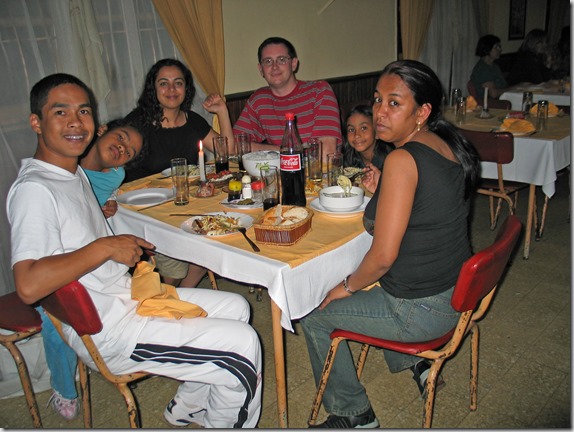
After a stop back at the hotel to freshen up, we took rickshaws down to a local restaurant for dinner.

IMG_5402_edited-1